

Lovette Jallow: The Black Swedish Author Who Started #Swedengate
How one tweet exposed Sweden’s cultural norms, systemic racism, and the cost of speaking truth as a Black woman
Table of Contents
- What Is #Swedengate? The Viral Moment That Shocked the World
- The Tweets That Started It All: Lovette Jallow’s Story
- The Reddit Post vs. The Real Origin Story
- How #Swedengate Became a Global Phenomenon
- International Media Coverage & The Erasure of Black Authorship
- The Racist Backlash: What Happens When Black Women Speak Truth
- Beyond Food: What #Swedengate Revealed About Swedish Society
- Sweden’s Defensive National Response
- From Viral Moment to Cultural Reckoning
What Is #Swedengate? The Viral Moment That Shocked the World
In late May 2022, a simple observation about Swedish hospitality customs ignited one of the most explosive cultural debates in social media history. The hashtag #Swedengate trended globally for weeks, generating over 12 million views, thousands of think pieces, and forcing an entire nation to confront uncomfortable truths about exclusion, xenophobia, and who gets to define “Swedishness.”
But here’s what most people don’t know: I started it.
My name is Lovette Jallow. I’m a Black Swedish author, DEIB strategist, and the person who first used the hashtag #Swedengate in connection with this controversy. And like so many Black women whose work gets erased, my role in sparking this global conversation was largely uncredited—until podcasters Ben Brock Johnson and Amory Sivertson tracked me down for their investigative series on WBUR.
This is the full story of #Swedengate, from someone who lived it—not as a curious observer, but as a Black immigrant child who experienced Swedish exclusion firsthand, and later as the adult who refused to stay silent about it.
The Tweets That Started #Swedengate: My Story
It started with humor. On May 29, 2022, I watched as Twitter discovered something that every Black and Brown child in Sweden already knew: Swedish families often don’t feed their guests—even children—during mealtime.
A Reddit post had gone viral describing a childhood memory of being left in a friend’s bedroom while the family ate dinner. As a Gambian-Swedish woman who experienced this exact scenario countless times, I couldn’t help but laugh at the collective shock.
So I tweeted:
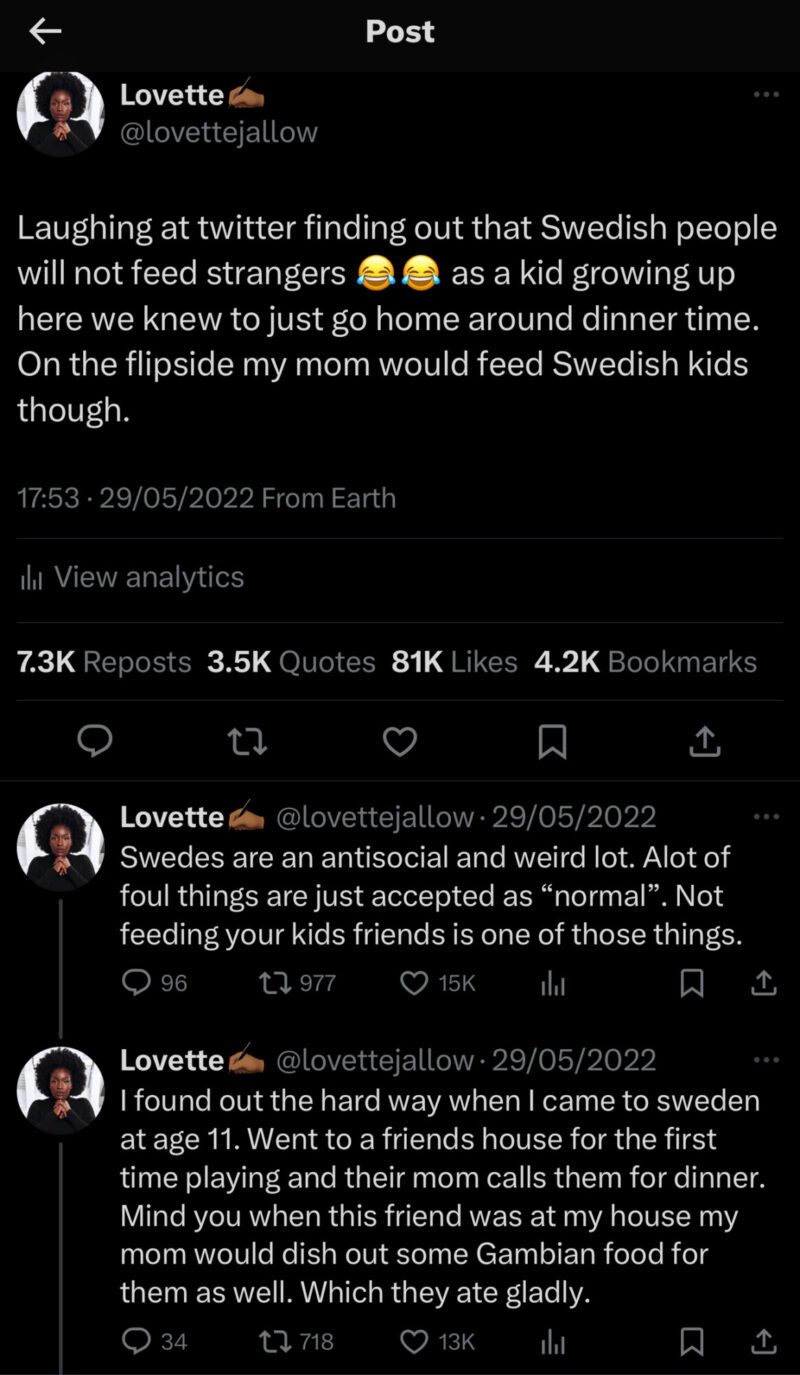
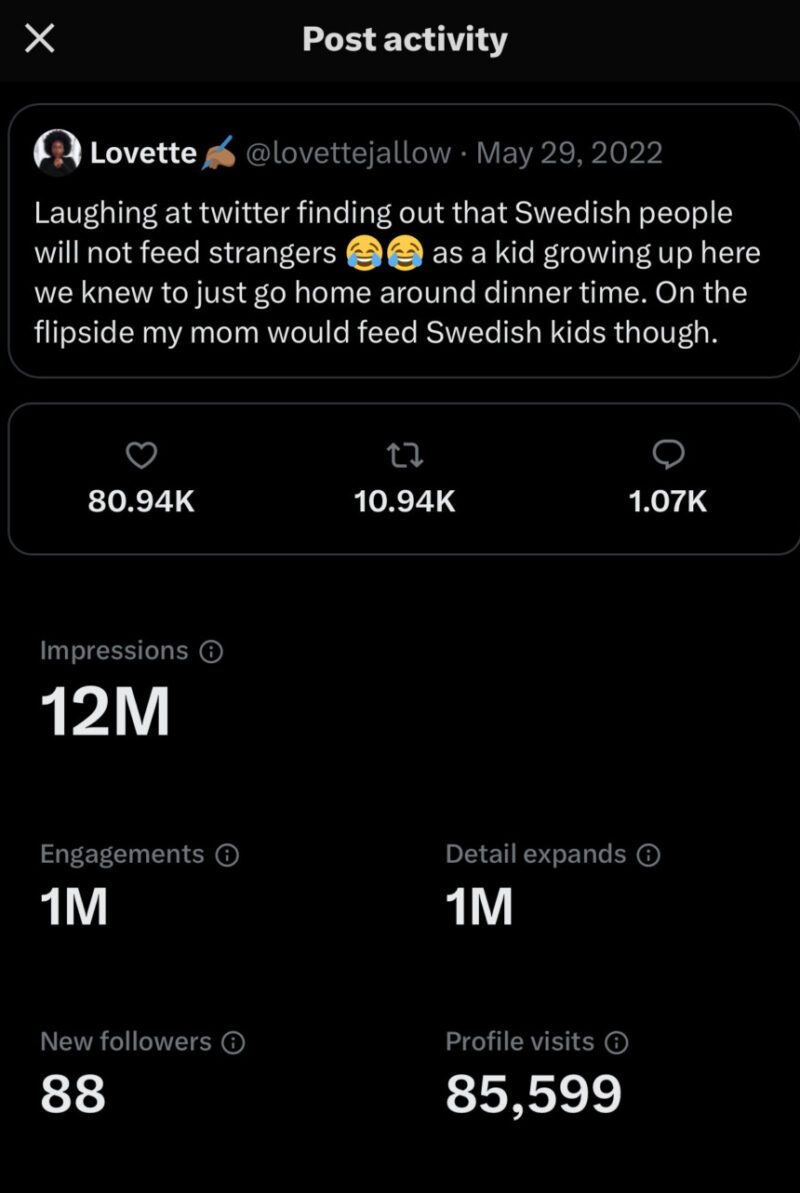
“Laughing at Twitter finding out that Swedish people will not feed strangers 😂😂 as a kid growing up here we knew to just go home around dinner time. On the flipside my mom would feed Swedish kids though.”
Then I added context that would prove prophetic:
“Swedes are an antisocial and weird lot. A lot of foul things are just accepted as ‘normal.’ Not feeding your kids’ friends is one of those things.”
I shared my personal story:
“I found out the hard way when I came to Sweden at age 11. Went to a friend’s house for the first time playing and their mom calls them for dinner. Mind you, when this friend was at my house my mom would dish out some Gambian food for them as well. Which they ate gladly.”
And the moment that crystallized the absurdity:
“As I trailed behind my friend heading for the dinner table, the mom sternly told me I was allowed to wait and play with the toys in my friend’s room until dinner was done. Let me just say, the Swedes are not well at all.”
Within hours, my tweets exploded. By the time the dust settled: over 12 million views, 10,000+ quoted retweets, and a global conversation that would dominate headlines for months.
But I wasn’t just tweeting into the void. I had already written about these Swedish cultural peculiarities in my book “Främling i vita rum” (Stranger in White Spaces), published by Bonniers in 2020. #Swedengate wasn’t a revelation to me—it was simply the moment the rest of the world finally paid attention.
The Reddit Post vs. The Real Origin Story
Here’s where the narrative gets messy.
Most media outlets—The New York Times, NPR, Euronews, Today.com, The Daily Beast, Slate—credited a Reddit user’s anonymous post as the origin of #Swedengate. The story was framed as a curious internet discovery: “The world just learned about this weird Swedish thing!”
But that’s not accurate.
The Reddit post existed, yes. A user described being left alone while his Swedish friend’s family ate dinner. But it was my tweets that named it #Swedengate, contextualized it within Sweden’s broader issues of exclusion and racism, and gave the conversation its viral momentum.
As I told WBUR’s Endless Thread podcast:
Amory: “Every media outlet—until we got to talk to her. This is Lovette Jallow. And it’s not lost on her that she hasn’t been credited until now because, as she explains it…”
Lovette: “That is the issue of being a Black woman. If I was a white Swede who had used the hashtag #Swedengate first, there would be acknowledgment for that.”
Ben: “Lovette thinks a lot about hypotheticals such as this. She’s a diversity, equity, and inclusion consultant who’s worked with companies like Spotify and Facebook…”
Amory: “…an activist and the author of two books about what it means to be Black in Sweden…”
Lovette: “…and in my spare time, apparently I start viral threads on social media without knowing it.”
The erasure wasn’t accidental. It’s structural. When Black women create cultural moments, our contributions are minimized, repackaged, and credited to more palatable sources. Reddit was anonymous. I was visible, vocal, and Black, which made me both easier to ignore and more dangerous to acknowledge.
How #Swedengate Became a Global Phenomenon
Within 48 hours, #Swedengate had become a full-blown international incident.
Twitter users from Nigeria, India, Saudi Arabia, Jamaica, Colombia, Pakistan, and across the African diaspora shared their horror and disbelief. In cultures where hospitality is sacred, the idea of not feeding a guest—especially a child—was incomprehensible.
“In Saudi Arabia, we had to make a video to stop people from inviting and insisting that census workers eat.”
A British Indian woman tweeted that she felt actively guilty for not having enough types of milk to offer a guest who stayed over uninvited.
The contrast was stark: while much of the Global South operates on principles of abundance and communal care, Sweden’s individualism had calcified into something that felt, to outsiders, like cruelty.
Even Swedish pop star Zara Larsson weighed in, confirming the practice was common in her childhood. As Euronews noted:
“A lot of families would [do that], and it wouldn’t be a strange thing,” Larsson said.
But for Black and Brown Swedes, #Swedengate wasn’t just about food. It was about belonging. It was about being told, again and again, in ways both subtle and explicit: You don’t fully belong here.
International Media Coverage & The Erasure of Black Authorship
The New York Times, NPR, BBC, The Guardian, Slate, Refinery29, InsideHook, The Daily Beast—everyone covered #Swedengate. But very few credited me.
Lola Akinmade Åkerström wrote in The New York Times:
“On a warm day in late May, life was humming along, punctuated by fika breaks, with pastries, coffee, and conversation, when Sweden found itself thrust into the center of a global Twitter storm. Usually known for its generous social safety nets, latte papas, and midsummer frolics, the Scandinavian nation was trending—and not in a good way.”
She continued:
“The critical gaze of social media users around the world was suddenly trained on the curious Swedish tradition of not automatically offering food to guests—including children invited over for play dates—while the host family sits down to eat. It started with a Reddit user… and escalated into Swedengate, a hashtag and multilayered takedown of a nation more accustomed to praise than mockery.”
But it didn’t start with Reddit. It started with me.
Åkerström’s piece did acknowledge something crucial, though:
“As a Black woman and author, [Lovette Jallow] confirmed the xenophobic backlash she received and noted that it is expected every time someone speaks an uncomfortable truth, even with humor, about Sweden.”
That backlash was immediate, vicious, and predictable.
The Racist Backlash: What Happens When Black Women Speak Truth in Sweden
Within hours of my tweets going viral, the hate started pouring in.
Racial slurs. Death threats. Swedes telling me to “go back to Africa.” The n-word, liberally deployed. Messages calling me ungrateful, divisive, a race-baiter, a liar.
I told Euronews:
“Even though I am Swedish, also being Black means I live at an intersection where whenever I speak about my lived experiences, the most common response is to call me an n-word, racial slurs, and strangers telling me on the internet to leave my own country.”
This wasn’t new. As I shared in the WBUR interview:
Lovette: “It wasn’t unusual for kids to call me a monkey or to ask me if my skin is brown because I smeared myself with poop, you know, things like that.”
The racist harassment I received during #Swedengate was just a digitized version of the racism I’ve faced my entire life in Sweden. The difference was scale and visibility.
And here’s the thing: this is exactly what Sweden doesn’t want the world to see.
As I tweeted:
“This started out as sharing a memory. White people shared their experiences as did Black and Brown Swedes. Do you want to guess which group racist Swedish trolls targeted for racial harassment? But Sweden is not racist, of course.”
Beyond Food: What #Swedengate Revealed About Swedish Society
#Swedengate was never just about dinner invitations. It was about who gets to be Swedish, who gets to be welcomed, and what happens when you challenge national mythology.
Sweden has carefully cultivated a global image: progressive, egalitarian, the world’s moral conscience. But that brand depends on silence—specifically, the silence of Black, Brown, and immigrant Swedes about our lived realities.
In my 2018 TEDx Talk, “Normalizing Silence in Swedish Society,” I addressed this exact issue:
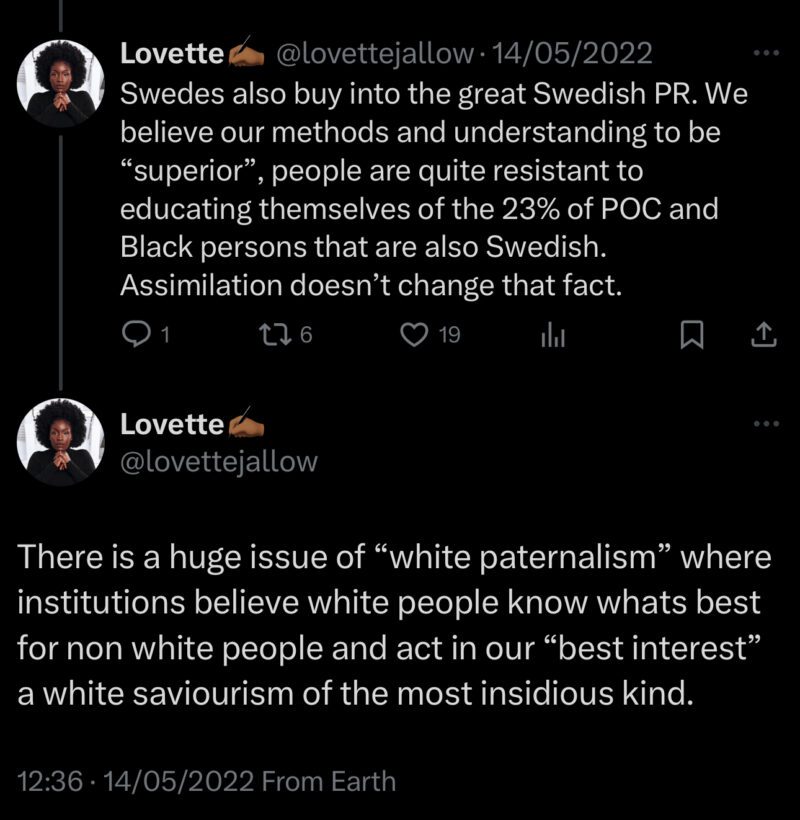
“This is the Swedish PR system working overtime. We top a lot of positive lists, but whose experiences do they take into account? Certainly not the 33.3% of the population with one or both parents born outside Europe.”
I also highlighted the structural problems with Sweden’s approach to diversity:
“We still have huge issues with white paternalism, where institutions believe white people know what’s best for non-white people and act in our ‘best interest.’ DEI is failing in Sweden because now white women lead that role with an analysis more shallow than a puddle after a 2-minute drizzle. This is a self-serving white saviorism of the most insidious kind.”
#Swedengate opened Pandora’s box. Suddenly, people were discussing:
- Sweden’s historical role in slavery and colonialism (including manufacturing chains for enslaved people)
- Treatment of the Sámi indigenous population
- Sweden’s laissez-faire COVID-19 response that disproportionately harmed racialized communities
- Systemic racism in housing, education, employment, and healthcare
- The rise of far-right nationalism and anti-immigrant sentiment
As Refinery29 reported, Black Twitter used #Swedengate to share experiences of exclusion that went far deeper than uneaten dinners:
“I’m Muslim & every time I went to my Swedish friend’s house to play as a kid, they were always eating pork. Of course I couldn’t eat it so I had to sit in the room and wait for them to finish. Today #Swedengate made me realize that was not a coincidence. These people are just stingy.”
From The Daily Beast:
“The cultural lesson quickly grew into an internet-wide venting session, with multiple people recalling childhood memories of sitting alone in a playroom while their friend sauntered down to the dining room for a plate of köttbullar without them.”
Sweden’s Defensive National Response
Sweden did not take #Swedengate well.
As Slate observed:
“As someone who lived there for a couple of years, I always find it funny when the internet kicks the door open and reveals Sweden, standing with its pants down round its milky white ankles looking affronted.”
Swedish media went into overdrive. SVT, TV4, Svenska Dagbladet—all brought on academics, food experts, and cultural commentators to explain, justify, or deny the practice.
Euronews quoted Stockholm University lecturer Ian Higham:
“There is so much hysteria and seriousness around this that it’s genuinely hard to decide what’s satire and what is real debate. I wish non-Swedish speakers could understand how the absolute most entertaining thing about #Swedengate is the deadly serious debate in domestic media with takes from experts on ‘food security’ and on foreign policy options for salvaging the national brand.”
He added:
“Swedes being very sensitive about their image abroad, doubled down to try to deny or justify the practice. Sweden and the Swedish population invest a lot of money in cultivating, promoting, and protecting a national brand.”
Even Sweden’s official Twitter account got defensive, clapping back at critics.
But here’s what Sweden couldn’t explain away: the practice was real, widespread, and rooted in cultural norms that prioritize individual autonomy over communal care.
Some Swedes tried to rationalize it:
- “It’s about not imposing on others”
- “We don’t want to create obligation”
- “Our food is too modest to offer guests”
- “Food is expensive in Sweden”
Others flat-out denied it, insisting it was outdated or exaggerated.
But for those of us who lived it? It was undeniable.
From Viral Moment to Cultural Reckoning: What #Swedengate Means Today
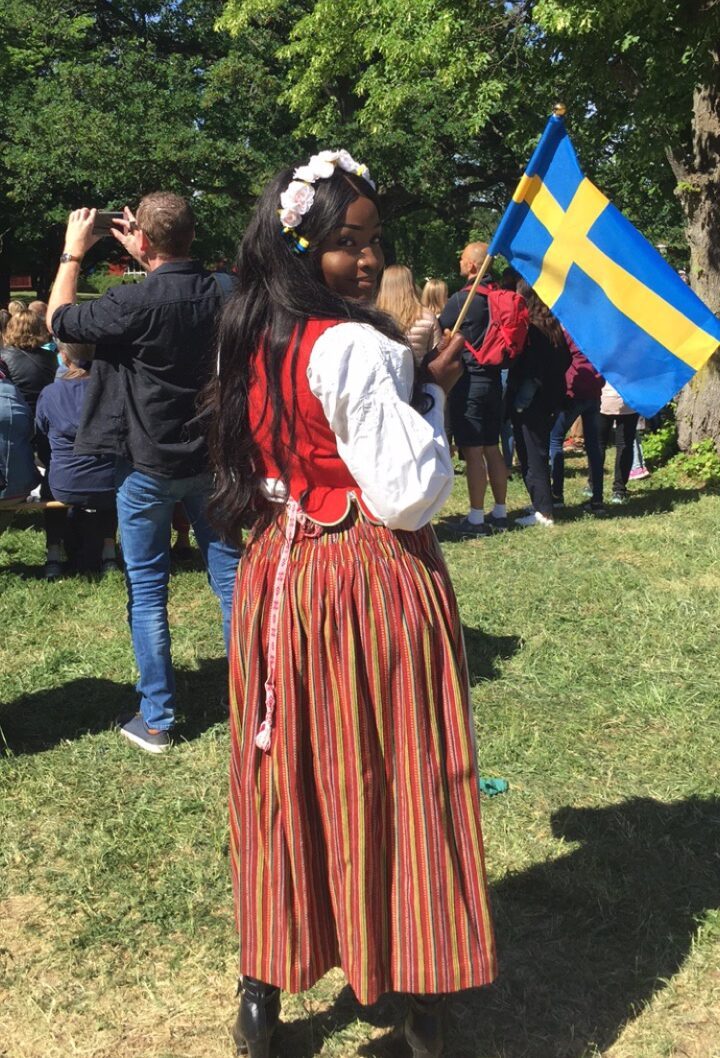
Three years later, #Swedengate remains a cultural touchstone.
As I told the WBUR podcast:
Lovette: “A lot of people are opening their eyes that no country is perfect, no country’s above criticism. Sweden is used every day against America. But how much better are we, really?”
The answer? Not as much as Sweden wants to believe.
Foreign Policy later examined #Swedengate as a case study in how easily misinformation spreads—but also how Sweden’s defensiveness revealed deeper truths about national identity, racism, and who gets believed.
The phenomenon underscored the power of social media in bringing diverse perspectives to light. It highlighted the importance of acknowledging and addressing cultural and racial issues openly and honestly.
As we continue to navigate these conversations, it’s crucial to listen to and amplify the voices of those who have been historically marginalized—especially when we’re the ones creating the hashtags, sparking the debates, and paying the price for speaking truth.
Continuing the Dialogue: Work With Lovette Jallow
My work didn’t start with #Swedengate, and it didn’t end there.
For over a decade, I’ve been working at the intersection of anti-racism, inclusion, neurodiversity, and systemic change across Sweden and internationally. I’ve consulted with Spotify, Facebook, SVT, Dramaten, and leading Swedish institutions on diversity, equity, and belonging.
If you’re a brand, organization, or media outlet in Sweden or the Nordics ready to move beyond performative diversity, I offer:
- Keynote speaking on racism, Swedish cultural norms, and inclusion
- DEIB consulting and organizational audits
- Strategic advisory for brands navigating representation and equity
- Media commentary on Swedish society, racism, and cultural identity
→ Book Lovette Jallow for speaking, campaign consulting, or strategic media advisory
Explore my books, including “Främling i vita rum” (Stranger in White Spaces) and “Black Vogue: Skönhetens Nyanser”.
Learn more about the Black Vogue movement at lovettejallow.com/blackvogue.
No one is voiceless. Some are silenced when they speak to the point of threats, and others never pass the microphone.
Written by: Lovette Jallow – Author, Lecturer, Entrepreneur, and Advocate for Neurodiversity
Thank you for reading and exploring diverse perspectives with me. As a Black woman living in Sweden, some of my differences are visible, while others, such as autism and ADHD, remain unseen. Yet, I believe that my perspectives are equally valuable because of these dualities.
All texts are copyrighted.
Om Lovette Jallow: Lovette Jallow är prisbelönt författare, föreläsare och grundare av Black Vogue Sverige – ett initiativ som förändrade hur den svenska skönhetsindustrin ser på inkludering och representation.
Boka Lovette för föreläsningar och konsultationer inom antirasism, inkludering och skönhetsbranschens framtid.